
Operating a high-volume kitchen in Downtown Phoenix during the 2026 culinary expansion requires more than just a talented chef and a great menu. Your restaurant depends on a hidden network of plumbing that stays under heavy pressure from morning prep until the late-night rush. The grease trap or grease interceptor serves as the primary defense for the sewer system of the city. If this system fails, the resulting backups can shut down your dining room and lead to thousands of dollars in fines from the City of Phoenix Water Services department. As a veteran plumber with over fifteen years of experience in the Valley, I have seen how the extreme heat and high density of the Downtown core create unique challenges for commercial plumbing systems. You cannot rely on a basic pumping schedule and expect to stay compliant with modern environmental standards.
The current 2026 regulatory landscape in Maricopa County has become significantly stricter regarding Fats, Oils, and Grease. This is known as the FOG program. The City of Phoenix Water Services enforces these rules to prevent sewer overflows that can damage city infrastructure. When grease enters the main sewer lines, it solidifies and catches other debris. This creates massive blockages that are difficult and expensive to remove. For business owners in neighborhoods like Roosevelt Row or the Warehouse District, a sewer backup is more than a mess. It is a health code violation that can result in an immediate suspension of your operating permit.

Understanding the Twenty Five Percent Rule in Phoenix
The most important regulation for any Phoenix restaurant owner to understand is the twenty five percent rule. This rule states that the total volume of grease and solids inside your interceptor must never exceed twenty five percent of its total capacity. Once you pass this threshold, the device loses its ability to effectively separate grease from water. At that point, FOG begins to escape into the effluent line and into the municipal sewer system. City inspectors regularly perform random checks on businesses in high-density areas like the Biltmore and Downtown. They use a device called a Sludge Judge to measure the layers of grease and solids. If they find you are over the limit, the penalties are swift. Having a superior cleaning strategy means you stay well below this limit at all times.
Many business owners try to save money by stretching the time between service calls. This is a high-risk gamble that rarely pays off. In the 2026 climate, where restaurant margins are tight and local competition is fierce, the cost of an emergency plumbing repair far exceeds the cost of routine maintenance. If you also manage residential properties or have staff living nearby, knowing how to get an emergency plumber to your Scottsdale home fast is vital for after-hours issues. However, for your commercial kitchen, prevention is the only reliable path to success. A professional strategy involves tracking your volume and adjusting your cleaning frequency based on your actual output rather than a generic calendar date.
Comparing Interceptor Technology for Phoenix Kitchens
Not all grease management systems are the same. Depending on the size of your facility and the volume of food you produce, you likely have either a small hydromechanical grease trap or a large gravity grease interceptor. The maintenance requirements for these vary significantly. Smaller traps are often located under the three-compartment sink or recessed in the floor. These require much more frequent service because they have limited holding capacity. Large gravity interceptors are usually buried outside the building and can hold thousands of gallons. These are common in larger establishments and multi-use buildings across the Phoenix metro area.
| System Type | Average Capacity | Cleaning Frequency | Primary Benefit |
|---|---|---|---|
| Hydromechanical Trap | 20 to 100 Gallons | 1 to 4 Weeks | Low initial cost and space saving |
| Gravity Interceptor | 750 to 5000 Gallons | 30 to 90 Days | High volume handling and fewer pump outs |
| Automatic Grease Removal | Variable | Daily Maintenance | Removes grease before it reaches the tank |
Persistent grease issues can sometimes mask larger structural problems like what happens when you need to fix a slab leak in Tempe. In commercial settings, the weight of the kitchen equipment and the constant flow of hot water can cause pipes to shift or crack. If your grease trap is filling up faster than normal, it could be a sign that the inlet or outlet pipes have settled or become misaligned. This is why a superior strategy includes a full inspection during every pump-out session. We do not just skim the top. We evacuate the entire tank to see what is happening with the baffles and the structure of the interceptor itself.
The Real Process of Professional Vacuum Truck Service
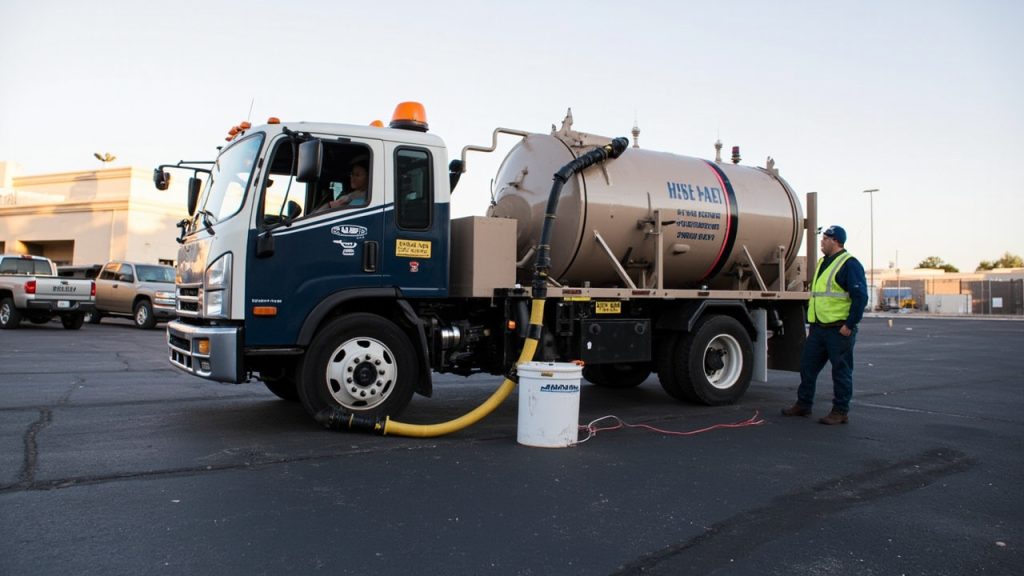
A true professional cleaning is a multi-step process that requires specialized equipment. Some low-cost providers only pump out the liquid and leave the heavy solids at the bottom. This is a major mistake. The solids occupy valuable space and quickly lead to a violation of the twenty five percent rule. A comprehensive service starts with a high-capacity vacuum truck that can handle the thickest sludge. The technician must pump out all contents and then use a high-pressure hose to scrape the grease off the walls and the baffles. The baffles are the internal walls that slow down the water flow to allow grease to rise. If these are broken or covered in hardened grease, the trap will not work correctly.
Hard water in the valley complicates these systems. Just like water softener installation for Chandler hard water protects home pipes, your commercial equipment needs protection from mineral scale. When calcium and magnesium from the Phoenix water supply mix with fats and soaps, they form a hard substance called lime-soap. This material is incredibly difficult to remove once it hardens on the walls of your interceptor. Our strategy involves using specialized scrapers and occasionally chemical treatments that are safe for the sewer system but effective at breaking down these deposits. We also check the condition of the manhole covers and seals to ensure that sewer gases are not escaping into your outdoor dining areas or neighboring businesses.

Documentation and Maricopa County Disposal Manifests
In 2026, the paper trail is just as important as the plumbing work. Every time your grease interceptor is cleaned, you must receive a disposal manifest. This document proves that the waste was hauled away by a licensed service provider and disposed of at a legal facility. The Maricopa County Environmental Services Department requires you to keep these logs on-site for at least three years. If an inspector walks into your Downtown Phoenix restaurant and you cannot produce these records, you will face immediate citations. This applies even if your trap is perfectly clean at that moment. The logic is that without a manifest, the county cannot verify that the grease was not dumped illegally into a storm drain or a regular trash bin.
A superior strategy includes a digital backup of all your manifests. We provide our clients with a cloud-based log that can be accessed instantly during an inspection. This level of organization demonstrates to the city that you are a responsible operator. It also helps you track your grease production over time. If you notice that you are hitting the twenty five percent limit faster during certain seasons, you can adjust your budget and schedule accordingly. This data-driven approach is what separates successful modern restaurants from those that are constantly struggling with plumbing emergencies.
Protecting Your Commercial Sewer Lines with Hydro Jetting
The grease trap only protects the lines after the interceptor. The pipes leading from your sinks, dishwashers, and floor drains to the trap are still vulnerable to buildup. Hot water may keep grease liquid for a short distance, but it quickly cools and sticks to the pipe walls. Over time, the internal diameter of your pipes shrinks. This leads to slow drains and foul odors in your kitchen. For heavy buildup in the main sewer line, we use hydro jetting in Mesa and Phoenix to clear the path completely. This process uses water at extremely high pressure to blast away grease and scale without damaging the pipes.
Upgrading your kitchen might include high-efficiency heating. Many homeowners are choosing tankless water heater upgrades and restaurants are following that trend to save space and ensure a constant supply of hot water. While tankless systems are great for sanitization, the consistent high heat can sometimes push grease further down the line before it has a chance to settle in the trap. This makes regular hydro-jetting an essential part of your maintenance strategy. You should aim to jet your internal kitchen lines at least twice a year to ensure that you never have a backup during a busy Friday night shift in the heart of Downtown.
| Maintenance Task | Recommended Frequency | Why It Matters |
|---|---|---|
| Full Interceptor Pump Out | Every 30 to 90 Days | Ensures compliance with the 25 percent rule |
| Internal Line Hydro Jetting | Every 6 Months | Prevents kitchen sink and floor drain backups |
| Baffle and Seal Inspection | During Every Pump Out | Identifies structural failures before they cause leaks |
| FOG Log Update | Immediate | Required for Maricopa County compliance checks |
Common Compliance Mistakes for Phoenix Business Owners
After years of working in the Phoenix metro area, I have identified several recurring mistakes that lead to fines and plumbing disasters. Avoiding these will put you ahead of most of your competitors. The list below covers the most frequent errors observed by inspectors in 2026.
- Only pumping the top layer of grease and leaving the food solids at the bottom.
- Using enzymes or biological additives as a substitute for physical cleaning. The city actually prohibits many of these because they simply move the grease further down the sewer line.
- Failing to clean the sample box or the effluent T-pipe which can lead to false readings during an inspection.
- Allowing kitchen staff to pour used cooking oil down the drain instead of using a dedicated recycling bin.
- Neglecting to inspect the interceptor for cracks or root intrusions which are common in older Downtown Phoenix districts.
Roosevelt Row and the surrounding areas have many historic buildings that have been converted into modern eateries. These buildings often have clay or cast iron sewer lines that are much more susceptible to damage from grease buildup. If you are operating in one of these locations, your strategy must be even more aggressive. The rough interior of older pipes provides the perfect surface for grease to grab onto. Once a blockage starts in a cast iron pipe, it grows rapidly. Routine maintenance is the only way to protect these fragile historic systems while still running a high-volume modern business.
The Impact of Arizona Heat on Grease Trap Odors
The Phoenix heat is a major factor in how your grease trap behaves. In the summer of 2026, we have seen temperatures that accelerate the decomposition of organic matter in the traps. This leads to the production of hydrogen sulfide gas, which has a strong rotten egg smell. If your interceptor is located near your outdoor patio or the entrance to your restaurant, these odors can drive away customers. A superior strategy involves checking the seals on your interceptor lids during the spring before the heat hits its peak. If the seals are worn out, the gases will escape. We also recommend a thorough cleaning right before the summer season to remove the accumulated solids that contribute most to the smell.
Managing a restaurant in the 2026 Phoenix market is challenging enough without having to worry about sewer backups and city fines. By implementing a proactive grease trap cleaning strategy, you protect your investment and ensure your doors stay open. This involves partnering with a plumbing service that understands the specific local regulations of Maricopa County and the technical requirements of commercial kitchen infrastructure. We provide the expertise and the documentation you need to stay compliant and focused on your customers. Whether you are in the Biltmore, Arcadia, or the heart of Downtown, your plumbing is the backbone of your operation. Treat it with the priority it deserves.
If you are ready to upgrade your grease management strategy and ensure your kitchen stays compliant with all Phoenix FOG regulations, reach out for a professional assessment. We can help you establish a schedule that fits your volume and keeps your business running smoothly throughout the year.