
Choosing the right water heater for your Surprise property in 2026 involves more than just picking a brand. The desert climate in the West Valley presents specific challenges and opportunities for homeowners. As temperatures in the Phoenix metro area continue to push the limits of efficiency, your choice between a traditional electric tank and a hybrid heat pump system will impact your utility bills for the next decade. This guide helps you navigate the technical differences and financial implications of these two popular options.
The Basic Mechanics of Traditional Electric Resistance Heating
Traditional electric water heaters have served Surprise homes for decades. These units use two electric resistance elements submerged in the water tank. When the thermostat detects a drop in temperature, the elements turn on and heat the water directly. This process is simple and reliable. It is also remarkably consistent. Because the heating elements do not rely on the surrounding air, the unit performs the same whether it is 115 degrees outside or a rare chilly morning in January.
However, resistance heating is not the most efficient method available in 2026. Every unit of electricity consumed is converted into heat at a one-to-one ratio. This means there is a hard ceiling on how efficient these units can become. For many residents in neighborhoods like Marley Park or Asante, the simplicity of the system is a trade-off for higher monthly operating costs. These units are also smaller and easier to tuck into tight closets or small garage corners because they do not require specific airflow patterns to operate.
How Hybrid Heat Pump Technology Works in the Phoenix Climate
Hybrid water heaters use a completely different approach. They do not generate heat. Instead, they move heat from one place to another. This technology is similar to how your air conditioner works but in reverse. A heat pump on top of the tank pulls in warm air from your garage. It runs that air over an evaporator coil containing refrigerant. The compressor then increases the pressure and temperature of that refrigerant to heat the water inside the tank. In 2026, these units are the standard for energy-conscious Surprise homeowners.
In a place like the Phoenix metro area, hybrid heaters are exceptionally effective. During the summer, your garage air acts as a massive battery of thermal energy. The hybrid unit thrives in this environment. It can extract heat with very little effort, which pushes the efficiency levels far beyond what a traditional heater can achieve. Many residents find that their hybrid unit operates in heat pump mode for the vast majority of the year, only switching to electric resistance back-up during extreme demand or very cold snaps.
The Unique Advantage of Garage Cooling in Surprise
One benefit of hybrid water heaters that often surprises residents in Greer Ranch or Sun City Grand is the exhaust air. When a hybrid heater pulls heat out of the air to warm your water, it exhausts cold, dry air back into the room. If your water heater is located in your garage, this acts as a small, localized air conditioner. While it will not turn your garage into a meat locker, it can lower the temperature in the immediate vicinity by several degrees. This is a welcome side effect during a July afternoon in Arizona.
Traditional electric units do not offer this benefit. In fact, a traditional tank can actually radiate a small amount of heat back into the garage as it maintains the water temperature inside. For homeowners who spend time working in their garage or have a home gym in that space, the cooling effect of the hybrid system is a significant secondary advantage. This process also acts as a dehumidifier, though humidity is rarely a major concern in the Surprise area compared to other parts of the country.
Comparing Technical Specifications and Performance Metrics
When you look at the data for 2026 models, the differences in efficiency are striking. We use the Uniform Energy Factor or UEF to measure how much hot water is produced per unit of fuel consumed. A higher number indicates better efficiency. Traditional electric tanks usually have a UEF around 0.93. Hybrid units frequently reach UEF ratings of 3.5 to 4.0. This means the hybrid unit is roughly four times more efficient than the traditional alternative.
| Feature | Traditional Electric Tank | Hybrid Heat Pump Unit |
|---|---|---|
| Uniform Energy Factor (UEF) | 0.92 to 0.94 | 3.3 to 4.0 |
| Annual Operating Cost | Estimated 550 to 650 dollars | Estimated 150 to 200 dollars |
| Typical Lifespan | 10 to 12 years | 13 to 15 years |
| Noise Level | Silent | 45 to 55 Decibels |
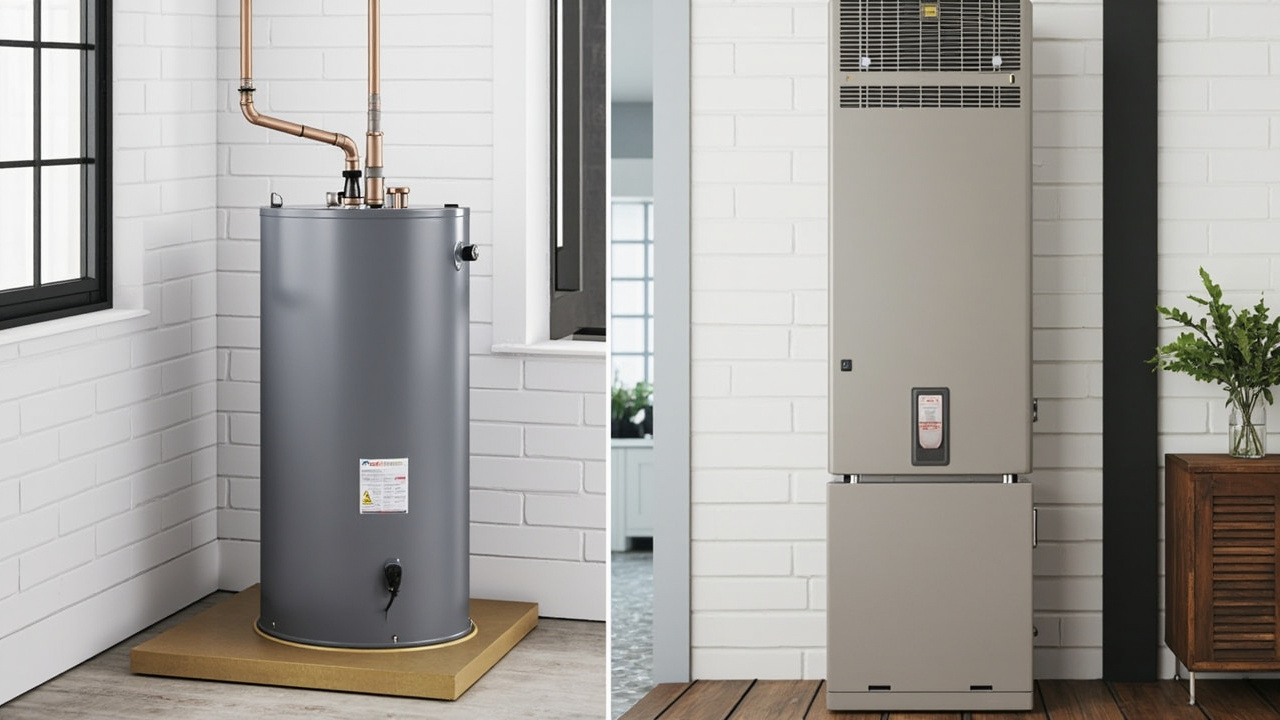
| Physical Size | Standard dimensions | Often 6 to 10 inches taller |
Installation Requirements and Space Considerations
You cannot simply swap a traditional unit for a hybrid without checking your space. Hybrid heaters require airflow. Most manufacturers specify that the unit must be in a room with at least 1,000 cubic feet of air space. In a standard two-car or three-car garage in Surprise, this is usually not an issue. However, if your heater is in a small interior closet, we may need to install louvered doors to allow the unit to breathe. Without proper airflow, the heat pump cannot function efficiently, and the unit will default to expensive electric resistance mode.
Another critical installation factor is the condensate drain. Because hybrid heaters cool the air, they create condensation just like an air conditioner. We must install a drain line to move this water out of your garage or into a nearby floor drain. If your garage does not have a floor drain, we might need to install a small condensate pump to move the water to the exterior of the home. This is a common requirement that we handle during the installation process in the West Valley. If you are also considering tankless water heater upgrades, the venting and electrical needs will be different than those of a hybrid system.
Financial Incentives and Utility Rebates in 2026
The upfront cost of a hybrid water heater is higher than a traditional tank. However, current financial incentives in 2026 significantly bridge that gap. The Salt River Project or SRP and Arizona Public Service or APS both offer aggressive rebate programs for Surprise residents. These rebates often cover a substantial portion of the equipment cost. Additionally, federal tax credits under the 25C Energy Efficient Home Improvement Credit remain active in 2026, allowing homeowners to claim a credit of up to 2,000 dollars for qualifying heat pump water heaters.
When you combine the utility rebate with the federal tax credit, the net cost of a hybrid unit often becomes comparable to a high-quality traditional unit. When you add the annual energy savings of approximately 400 dollars, the system usually pays for itself in less than three years. For homeowners in the Phoenix metro area who plan to stay in their property for more than five years, the hybrid option is almost always the more financially sound investment. You can find more information on energy standards at the Department of Energy website.
Hard Water and Maintenance in the Surprise Area
The water in Surprise contains high levels of minerals like calcium and magnesium. These minerals can build up inside any water heater, leading to scale formation. Scale acts as an insulator, making it harder for the heat to reach the water. In a traditional unit, scale can cause the bottom element to burn out prematurely. In a hybrid unit, scale can settle on the bottom of the tank and reduce the overall capacity. Regular flushing is essential for both types of systems to maintain efficiency.
We recommend a professional flush at least once per year. This process removes the sediment before it hardens into scale. To provide long-term protection, many of our clients opt for a water softener installation to treat the water before it enters the heater. This significantly extends the life of the internal anode rod. The anode rod is a sacrificial metal component that prevents the tank from rusting. In the harsh water conditions of Arizona, checking this rod every two or three years is a standard part of expert maintenance.
Noise Levels and Household Comfort
Traditional water heaters are silent. There are no moving parts. Hybrid heaters, on the other hand, have a fan and a compressor on top. When the unit is running in heat pump mode, it produces a humming sound similar to a modern dishwasher or a large refrigerator. If your water heater is located in a garage that shares a wall with a bedroom, you may hear a faint vibration or hum when the unit is active. In 2026, manufacturers have made these units much quieter than previous versions, but the sound is still a factor to consider.
For most Surprise residents, the noise is not an issue because the units are located in the garage. If you have a sensitive ear or a specific home layout, we can install vibration isolation pads under the unit. These pads help dampen the sound transfer through the floor and walls. It is also worth noting that the hybrid unit only makes noise when it is actively heating water. Most of the time, it sits silently just like a traditional tank. If you ever hear loud banging or popping, that is a sign of sediment buildup rather than the compressor, and you should call for service.
Recovery Rates and Hot Water Delivery
Recovery rate refers to how quickly a heater can provide a new batch of hot water after the tank has been emptied. Traditional electric heaters have a steady recovery rate because they use high-wattage elements. Hybrid heaters have several modes. In high-efficiency mode, they use only the heat pump, which has a slower recovery rate than electric elements. However, all hybrid units come with a hybrid or auto mode. This mode uses the heat pump for efficiency but can activate the electric elements if it senses you are running out of hot water during a period of high demand.
- Heat Pump Mode provides the highest savings and works best for small households.
- Hybrid Mode balances savings with recovery speed for the average family.
- High Demand Mode prioritizes recovery speed for when you have house guests.
- Electric Mode works just like a traditional heater if the heat pump ever needs repair.
This flexibility makes the hybrid unit very reliable. Even if the compressor has an issue, the unit can still provide hot water using its backup elements. This ensures you are never stuck with a cold shower while waiting for a part. If you experience sudden water pressure drops or leaks that might indicate a larger plumbing issue, you should have us check for a slab leak in Tempe or your Surprise home to ensure your system is intact.
Financial Comparison of Operating Costs over Ten Years
To understand the true cost of ownership, we must look at the ten-year projection. While the initial purchase price of a hybrid unit is higher, the cumulative savings in Arizona are massive. We have calculated these estimates based on current 2026 utility rates in the Phoenix metro area and typical hot water usage for a family of four. These figures assume the use of SRP or APS rebates and federal tax incentives.
| Cost Category | Traditional Electric | Hybrid Heat Pump |
|---|---|---|
| Average Purchase and Install | 1,800 to 2,400 dollars | 3,800 to 5,000 dollars |
| Rebates and Tax Credits | 0 dollars | Up to 2,800 dollars |
| Net Initial Investment | 2,100 dollars (avg) | 2,200 dollars (avg) |
| 10 Year Energy Cost | 6,000 dollars | 1,800 dollars |
| Total 10 Year Cost | 8,100 dollars | 4,000 dollars |
As the data shows, the hybrid unit saves a typical Surprise family over 4,000 dollars over the life of the unit. This makes it one of the most effective home upgrades for reducing monthly overhead. The local climate is essentially a free energy source for these machines. You can see more about water efficiency standards at the EPA WaterSense page.
Expert Recommendations for Your Surprise Property
If your current water heater is approaching the ten-year mark, now is the time to plan your upgrade. Waiting for a tank to burst can lead to water damage and a rushed decision that might not be the most efficient. We see many residents in the Surprise area who are surprised by how much their old electric tank was adding to their power bill. A proactive replacement allows you to take advantage of all available rebates and select the best model for your specific home layout.
Maintenance is the key to longevity for any high-performance appliance. Just as we use hydro jetting in Mesa to keep main lines clear, we use specialized tools to keep your hybrid heater running at peak performance. If you have questions about whether your garage has the right clearance or if your electrical panel can handle a specific model, a professional assessment is the best first step. While we are helping homeowners in Surprise, our service area remains broad, so if you need an emergency plumber to your Scottsdale home fast, we are ready to assist there as well.
The choice between traditional and hybrid technology depends on your budget, your space, and how long you plan to live in your home. For most modern properties in Surprise, the hybrid heat pump water heater is the clear winner for 2026 and beyond. It offers superior efficiency, helps cool your garage, and provides a significant return on investment through energy savings and tax credits. Contact us today to schedule an inspection of your current system and receive a detailed quote for a new, high-efficiency water heater installation.