
Owning a pool in North Scottsdale during 2026 requires constant vigilance. The desert sun in Arizona is relentless. High temperatures accelerate water loss through evaporation. You might notice your water level dropping faster than usual. You wonder if the heat is to blame or if a pipe underground finally gave way. Identifying a leak early prevents structural damage to your patio and saves you from massive water bills. Residents in neighborhoods like DC Ranch and Troon North deal with specific soil conditions that put unique stress on PVC plumbing. Caliche and shifting desert floors can snap a return line or crack a skimmer throat without warning.
Distinguishing Evaporation from a Genuine Plumbing Leak
Before you call for professional help, you must confirm that the water loss exceeds normal rates. In 2026, the average North Scottsdale pool loses about a quarter inch of water daily through evaporation alone. During the peak of July, this can increase. If you are adding more than two inches of water per week, you likely have a plumbing issue. The most effective way to verify this is the bucket test. This simple method compares the water loss in a controlled container to the loss in the pool itself.
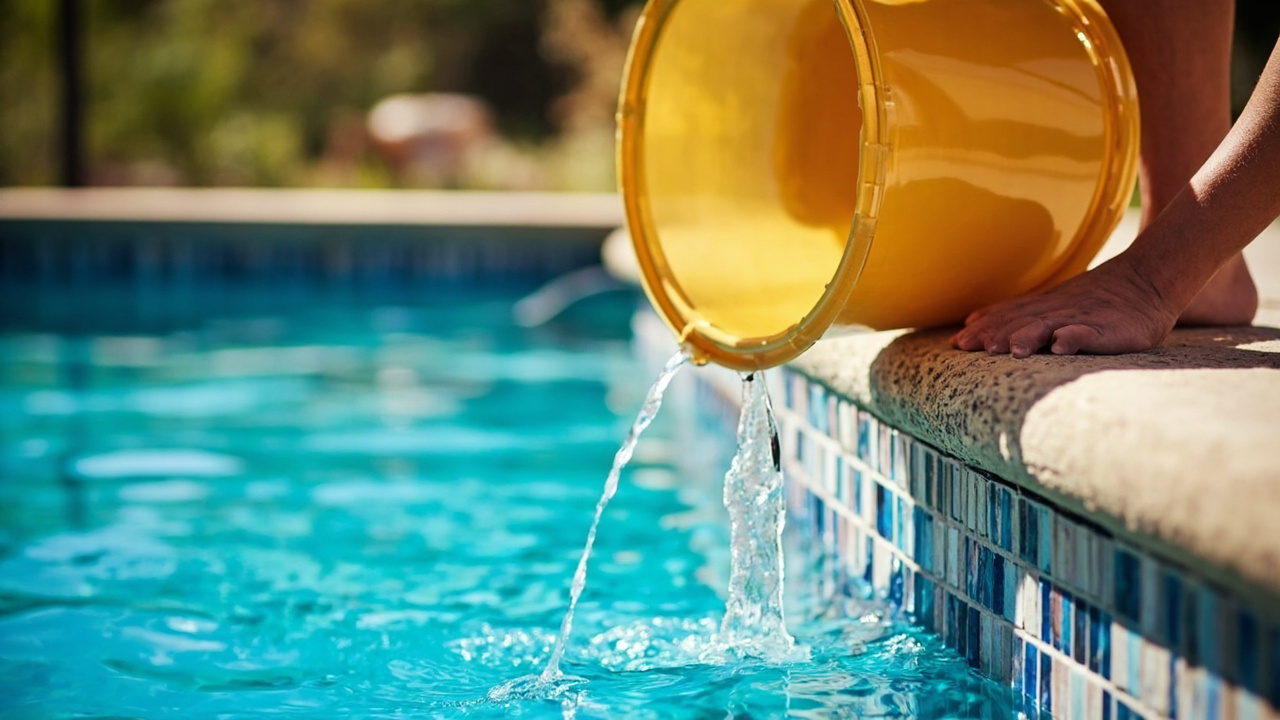
To perform the test, fill a five gallon bucket with pool water. Set it on the first or second step of your pool. Ensure the water level inside the bucket matches the pool water level exactly. Mark both levels with a piece of tape or a grease pencil. Turn off your auto fill system. Wait twenty four hours. If the pool water level dropped significantly more than the bucket level, you have a leak. This indicates the water is escaping through a hole or crack rather than just rising into the atmosphere as vapor.
Step by Step Guide to the 2026 Bucket Test
- Turn off the automatic water leveling valve to ensure no new water enters the pool during the test.
- Fill a plastic bucket with pool water and place it on a pool step where it is submerged but stays upright.
- Mark the water line inside the bucket and the water line on the outside of the bucket.
- Operate the pool pump as you normally would for a full day.
- Measure the difference between the two marks after twenty four hours pass.
Examining the Pool Equipment Pad for Visible Leaks
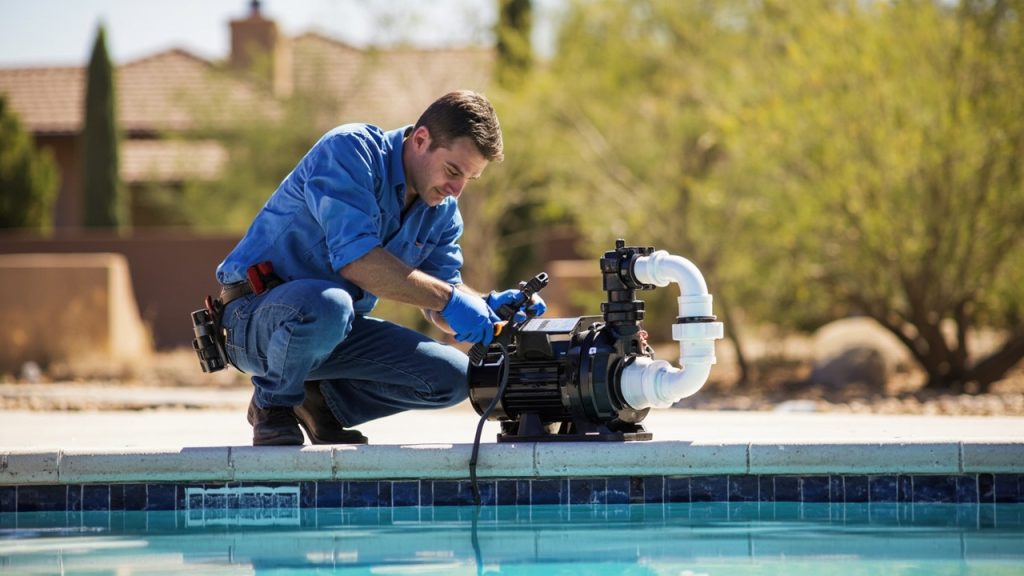
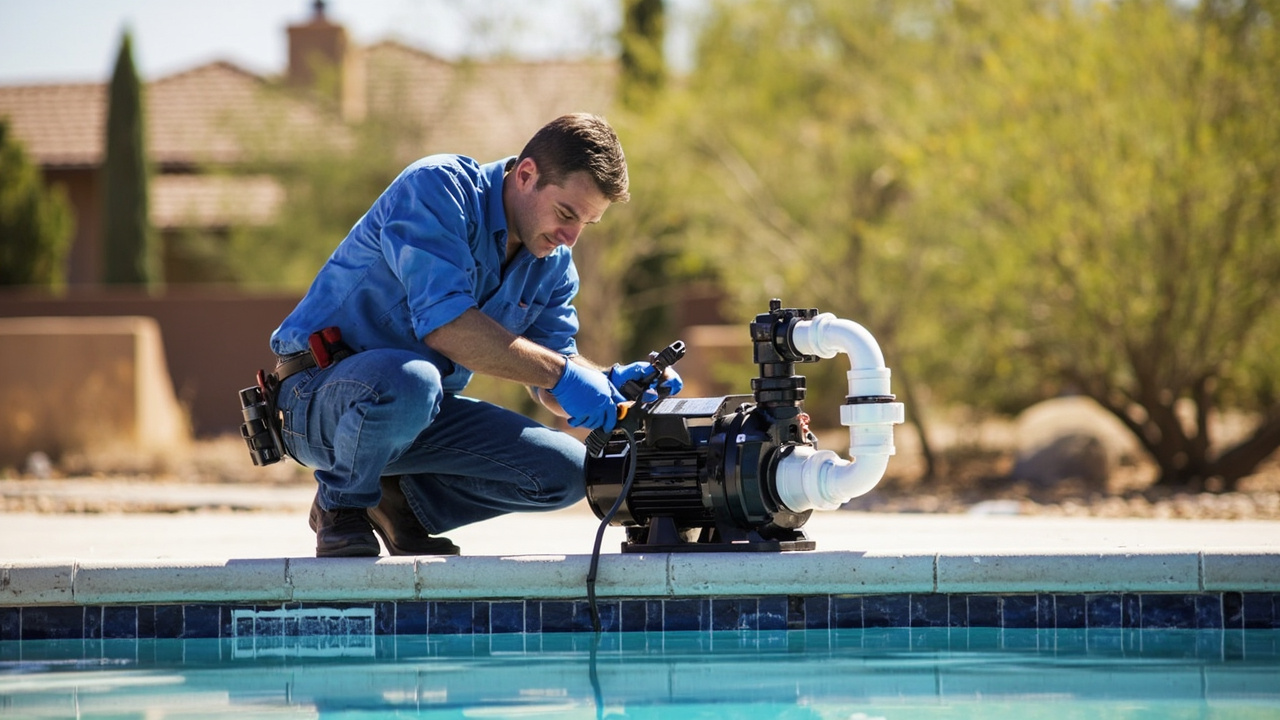
The equipment pad is the first place you should look for signs of trouble. This area contains the pump, filter, heater, and chlorinator. Because these components sit above ground, leaks here are usually easy to spot. Check for damp soil around the concrete pad or white crusty deposits on the PVC pipes. These deposits are often dried salt or calcium left behind as water drips and evaporates. Inspect the pump lid O-ring for cracks. A faulty seal here allows air into the system and water to spray out when the pump shuts down.
Look closely at the manifold where the water splits into different return lines. Heat from the Scottsdale sun can make older PVC brittle by 2026. This causes hairline fractures at the joints. If you see water pooling around the base of your Pentair or Jandy pump, the mechanical shaft seal might be failing. This is a common point of failure for high performance systems in Grayhawk and Silverleaf. If the leak is occurring only when the pump is running, the issue is on the pressure side. If it leaks more when the pump is off, the problem could be on the suction side or within the pool structure itself.
| Condition Type | Daily Water Loss Range | Primary Cause in 2026 |
|---|---|---|
| Normal Evaporation | 0.20 to 0.35 inches | Low humidity and high desert heat |
| Minor Plumbing Leak | 0.50 to 1.50 inches | Worn O-rings or loose fittings |
| Major Structural Leak | 2.00 to 5.00 inches | Cracked main drain or suction line failure |
The Impact of North Scottsdale Soil on Underground Pipes
Soil in North Scottsdale is notorious for high concentrations of caliche. Caliche is a natural cement-like substance that does not move easily. When the ground shifts due to moisture changes or nearby construction in the McDowell Mountains area, the rigid soil puts immense pressure on buried PVC. Most pool builders use Schedule 40 PVC, but even this heavy duty pipe can snap under the weight of shifting earth. If your pool was built several years ago, the glue joints might be reaching the end of their lifespan.
Ground movement often affects the connection between the pool shell and the plumbing. The skimmer is a frequent victim. Because the skimmer is encased in concrete but connected to PVC pipes buried in dirt, the two sections move at different rates. This differential movement causes the skimmer throat to crack. You can test this by squirtng a small amount of red food coloring near the visible cracks in the skimmer while the pump is off. If the dye gets sucked into the crack, you found your source. This is a common issue we see when getting an emergency plumber to your scottsdale home fast for backyard flooding.
Identifying Suction Side and Return Line Failures
Pool plumbing consists of two main parts. The suction side pulls water from the pool via the skimmers and main drain. The pressure side returns filtered, treated water back to the pool through the jets. A suction side leak is particularly annoying because it often introduces air into the system. You will see bubbles coming out of the return jets or a low water level in the pump basket. This can lead to pump cavitation, which eventually destroys the motor. If your pump is struggling to prime, check the intake valves first.
Return line leaks are harder to find without specialized equipment. These pipes are under pressure, so water is forced out into the surrounding soil. You might notice a wet spot in your landscaping or a patch of grass that grows faster than the rest of the yard. In some cases, the water may travel along the outside of the pipe and show up far from the actual break. This is why professionals use electronic leak detection and hydrostatic pressure tests. We isolate each line and apply pressure to see which one fails to hold it. This precision avoids unnecessary digging in your expensive North Scottsdale travertine or pavers.
Structural Leaks and Light Niches
Not every mystery pool leak is a plumbing problem. Sometimes the vessel itself is compromised. Small cracks in the plaster or Pebble Tec finish can leak water slowly. However, the most frequent structural leak happens at the pool light. The light sits in a niche that is connected to a conduit. This conduit runs back to the electrical subpanel. If the seal where the wire enters the conduit fails, water flows into the pipe and into the ground. This can lose hundreds of gallons a day. If you suspect this, use the dye test around the light rim. Repairing this usually involves a specialized cord stopper or marine grade sealant.
Another area to watch is the tile line. In 2026, many Scottsdale homes feature infinity edges or complex water features. The grout between tiles can wear down, allowing water to seep behind the wall. Over time, this water causes the soil behind the pool to expand, leading to more cracks. If you notice calcium buildup on the outside of a raised bond beam or stone wall, water is likely migrating through the structure. Addressing this early is much cheaper than dealing with a total wall failure. It is similar to the urgency required when managing the best way to handle a slab leak in tempe (and who to call) before it ruins a foundation.
| Component Name | Average Lifespan | Common Failure Point |
|---|---|---|
| PVC Pipe Schedule 40 | 25 to 40 Years | Ground shifting or caliche pressure |
| Pump Mechanical Seal | 4 to 7 Years | Heat and chemical degradation | 10 to 15 Years | Freeze-thaw cycles and plastic fatigue |
| Main Drain Sump | 20 to 30 Years | Hydrostatic valve failure |
How Professional Leak Detection Works
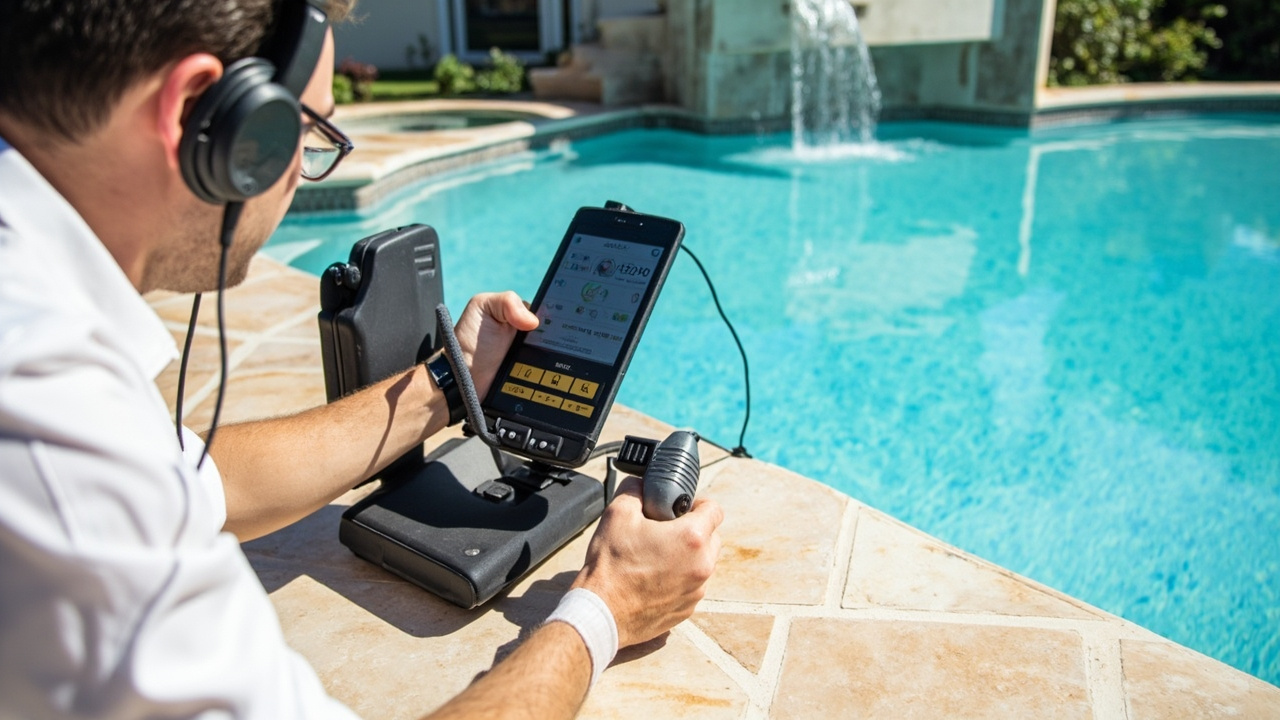
When the bucket test confirms a leak but the source remains hidden, we bring in advanced technology. In 2026, we utilize ultrasonic microphones to listen for the sound of escaping water deep underground. Water under pressure makes a specific frequency as it exits a pipe. By scanning the deck and yard, we can pinpoint the location of the break within a few inches. This minimizes the footprint of the repair. We also use moisture sensors and thermal imaging cameras to see temperature variations in the soil that indicate a saturation point.
Pressure testing remains the gold standard. We plug the lines at the pool and the equipment pad. We then use a manifold to pump air or water into the pipe. If the pressure gauge drops, we know that specific line has a hole. For especially difficult cases, we use a tracer gas. We inject a safe, non-toxic gas into the plumbing and use a sensor to find where it emerges from the ground. This level of accuracy is essential for high end properties in North Scottsdale where landscaping costs are significant. Once the leak is found, we can often perform a localized repair rather than replacing the entire run of pipe. This efficiency is why many homeowners are also looking at modern upgrades like why gilbert homeowners are choosing tankless water heater upgrades this year to improve overall home utility performance.
Maintaining Your Pool Plumbing in the Arizona Heat
Prevention is always better than a major repair. High water hardness in Phoenix can lead to scale buildup inside your pipes. This narrows the diameter of the plumbing and increases pressure. Much like professional water softener installation for chandler hard water helps indoor plumbing, maintaining proper water chemistry in your pool protects your pipes from the inside out. Keep your calcium hardness levels within the recommended range to prevent the water from becoming aggressive and eating away at your seals and copper heater elements.
Regularly inspect your backwash valve. If the internal gaskets fail, water can leak out through the waste line even when the valve is in the filter position. You might not see this leak because the water goes straight into the sewer or a dry well. Check the end of your backwash hose periodically while the pump is running. If it is dripping, you are losing water every second your pump is on. In a large pool, a faulty backwash valve can lose thousands of gallons per month without ever leaving a puddle on the ground. If you have older pipes that are prone to clogs, you might consider clearing stubborn main line blockages with hydro jetting in mesa or Scottsdale to keep the flow optimal.
According to the City of Scottsdale Water Conservation office, being proactive about leaks is a responsibility for every resident. They provide resources on reading your water meter to check for continuous flow. If you suspect a leak, watch your meter. Turn off the auto fill and all indoor water. If the little dial on the meter is still spinning, water is going somewhere it should not. This often points to a pool leak or a broken irrigation line. In the desert, every drop counts, and 2026 water rates reflect that reality.
Hiring a Local Pool Plumbing Specialist
When you choose a professional for pool plumbing repair, look for experience with the specific brands found in North Scottsdale. Pentair, Jandy, and Hayward systems are the standard. A plumber who understands the internal valving and flow requirements of these units will work faster and more accurately. Ensure the technician is familiar with the Pool and Hot Tub Alliance standards for safety and efficiency. This ensures your repair meets current 2026 codes and will last for many years to come.
A mystery pool leak does not have to be a source of constant stress. By using a systematic approach, you can narrow down the cause. Start with the bucket test, move to the equipment pad, and check the skimmers. If the answer remains elusive, professional leak detection will find it without destroying your backyard. Taking action today protects your investment and ensures your pool is ready for the next Scottsdale heatwave. If you notice your water bill rising or your pump struggling to stay primed, do not wait. A small drip today is a major pipe failure tomorrow.