
A slab leak in your Tempe home is a serious emergency that requires immediate action. These leaks occur when the water lines running beneath your concrete foundation fail. Because the pipes are buried under inches of reinforced concrete, you cannot see the problem until it starts damaging your property. In the Phoenix Valley, our specific environmental factors make slab leaks more common than in other parts of the country. If you suspect your foundation is leaking, you need a professional who understands the unique geography of Tempe and the current plumbing standards of 2026.
Tempe homeowners often face high water bills and foundation shifts due to these hidden failures. Whether you live near the Arizona State University campus or in the quieter neighborhoods of South Tempe like Warner Ranch, your home is built on soil that constantly moves. This movement puts immense pressure on your plumbing. When a pipe breaks under your floor, it can pump hundreds of gallons of water into the ground every hour. This water softens the soil and leads to foundation cracking or interior flooding. Finding the right solution early can save you thousands of dollars in restoration costs.
Many homes in neighborhoods like Shalimar Estates or Optimist Park were built during periods where copper piping was the primary material. Over time, these pipes succumb to the harsh chemistry of our desert soil. If you ignore the signs, you risk structural failure that could make your home uninhabitable. The urgency of a slab leak cannot be overstated. You are dealing with a pressurized water source that is actively eroding the ground supporting your entire house. Current 2026 plumbing standards require high-performance materials to prevent these issues from recurring.

Common Signs of a Slab Leak in Your Tempe Home
Identifying a slab leak early is the best way to prevent catastrophic damage. One of the first indicators is often high water bills that do not match your actual usage. If your bill spikes suddenly without a change in your habits, a hidden leak is the most likely culprit. You should also pay attention to the sound of your plumbing. If you hear water running or rushing in your walls when no faucets are on, water is escaping the system somewhere. This is especially noticeable at night when the neighborhood is quiet and traffic on Rural Road or Baseline Road has died down.
Physical changes to your flooring are also major red flags. You might notice warm spots on your tile or laminate floors. These hot spots usually indicate a leak in the hot water line, as the heat radiates through the concrete slab. In some cases, you may see moisture seeping up through the grout lines or notice that your baseboards are warping. If you see wet spots in yard areas directly adjacent to your foundation, the water may be migrating outward from under the house. You can verify this by checking your water meter. If the leak indicator is spinning while your emergency water shut-off service valve is open but all fixtures are closed, you have a leak.
Other subtle signs include cracks in the drywall or baseboards that seem to appear overnight. As the water saturates the soil under the slab, the foundation may heave or settle. This movement causes the frame of the house to shift, leading to cracks around door frames and windows. In Tempe, where the heat can reach extreme levels in 2026, the contrast between the dry exterior soil and the wet soil under the house accelerates this movement. You must act the moment you see these changes. Professionals in 2026 use advanced moisture meters to track how far the water has spread beneath your flooring.
| Symptom | Possible Cause | Urgency Level |
|---|---|---|
| Hot spots on floor | Hot water line rupture | High |
| Sudden bill spike | Constant water loss | Medium |
| Damp baseboards | Capillary action through slab | Critical |
| Foundation cracks | Soil erosion and shifting | High |
Why Tempe Soil Conditions Lead to Foundation Pipe Failures
The soil in the Phoenix area is notorious for its high clay content. This type of soil is considered expansive. When it rains during the monsoon season, the clay absorbs water and expands significantly. During the scorching summer months of 2026, the soil dries out and shrinks. This constant cycle of expansion and contraction causes the ground to move. According to recent geological studies, expansive soils cause more property damage annually than many other natural hazards. When the ground moves, it drags your plumbing along with it, leading to stress fractures in copper or plastic pipes.
Another factor is the chemistry of the water and soil in Tempe. Our soil is often highly alkaline, which can lead to a process called electrolysis. This happens when the soil reacts with the copper piping commonly used in homes built in previous decades. The chemical reaction creates pinhole leaks that eventually grow into major ruptures. Furthermore, the high mineral content in Valley water contributes to sediment buildup in pipes. This buildup creates friction and turbulence inside the line, wearing down the pipe walls from the inside out until a failure occurs under your slab.
Specific areas near the Salt River bed often have higher concentrations of abrasive silt and varying water tables. These conditions increase the rate of external pipe corrosion. If your home is located in North Tempe or near the Town Lake, your foundation sits on a complex mix of river rock and fine sediment. This mixture provides uneven support for concrete slabs, making them more prone to cracking when a leak occurs. Understanding these local geological factors is why hiring a specialist with deep Tempe roots is necessary for a successful repair. They will know how the caliche layers in our soil impact the speed of water migration.
Modern Leak Detection Methods in 2026
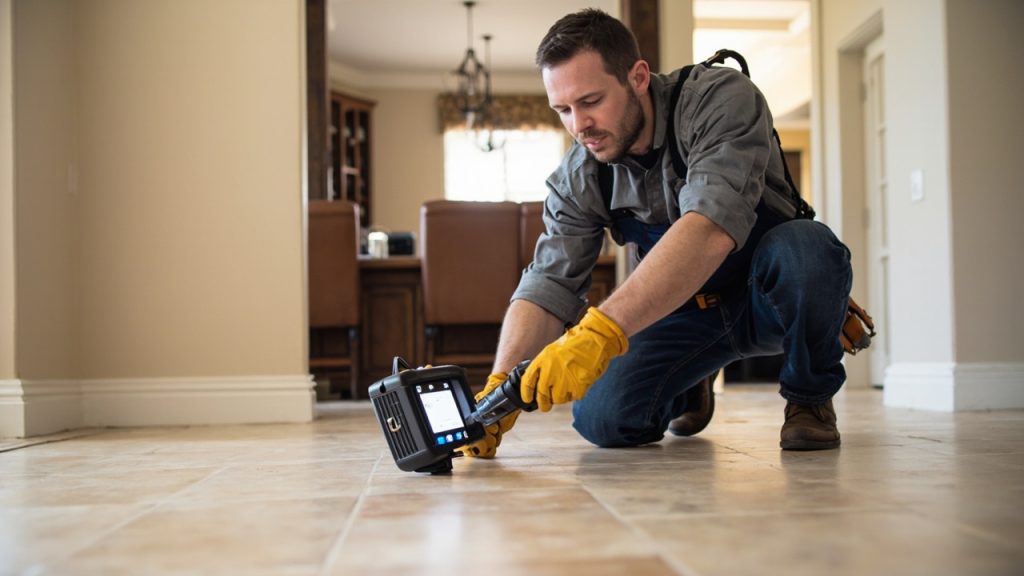
The days of guessing where a leak is located and tearing up your entire floor are over. Current technology allows us to pinpoint the exact location of a break within inches. In 2026, we use the Pulse-Sonic Gen-3 acoustic array. This system uses multi-point sensors that filter out the ambient noise of city traffic or household appliances. By analyzing the frequency of the vibration caused by escaping water, the system creates a digital map of the leak location. This non-invasive approach protects your home from unnecessary demolition.
We also employ the Hydra-Scan AI diagnostic software. This software connects to our acoustic sensors and thermal imaging cameras to cross-reference data points in real time. The AI can distinguish between a tiny pinhole leak and a major pipe burst by measuring the decibel threshold and the rate of thermal dissipation. If the leak is in a hot water line, the thermal camera identifies the exact plume of heat rising through the concrete. This visual data ensures we do not have to guess which tile to remove. We see the source before we ever pick up a tool. Current 2026 tools are more accurate than ever before.
Once we identify the general area, we perform a digital pressure test. This involves isolating sections of your plumbing to confirm which line is failing. We may also use tracer gases. We pump a safe, lightweight gas into the plumbing lines and use a sensor to detect where the gas escapes through the floor. This combination of tools ensures that when we finally make an entry point, it is in the correct spot. This precision is vital for minimizing the cost of your slab leak detection and repair project. In 2026, the efficiency of these tools has reduced the time required for detection by nearly fifty percent compared to older methods.
Our technicians also use Bluetooth 6.0 enabled transducers. These devices allow us to monitor pressure fluctuations across multiple fixtures simultaneously. By synchronizing this data with the AI software, we can identify secondary leaks that might have been caused by the same soil movement that created the first one. This comprehensive view of your plumbing health is the new standard for 2026. We ensure that when we fix one problem, we are not leaving another one behind to surface a month later. Thoroughness is our priority.

Slab Leak Repair Options in Tempe
Once the leak is located, you have several options for repair. The best choice depends on the age of your plumbing and the condition of the pipes. In 2026, we focus on solutions that provide long term reliability rather than just a quick fix. If your home is relatively new, a direct repair might be the most logical path. This involves removing a small section of the floor and concrete to reach the pipe. We then cut out the damaged section and install a new piece of high-quality piping. This is effective but can be disruptive to your living space.
For many Tempe homeowners, a reroute is the superior option. Instead of breaking through the foundation, we abandon the leaking pipe under the slab entirely. We then run a new line through the walls or attic to reconnect the fixtures. This method avoids the mess of jackhammering and ensures that the new pipe is no longer subject to the soil movements that caused the original failure. If your home has multiple leaks or aging copper, we might recommend whole home repiping. This replaces all the under-slab lines with modern materials like PEX-a. This flexible piping is much more resistant to the expansion and contraction of Arizona soil.
We also consider epoxy pipe lining for specific types of drain line leaks. This involves cleaning the interior of the pipe and applying a resin that hardens into a new, seamless pipe within the old one. While this is less common for high-pressure supply lines, it is a valuable tool for sewer leaks under the slab. Every home in Tempe is different, and we evaluate the integrity of your entire system before making a recommendation. Our goal is to provide a permanent solution that protects your property value and provides peace of mind in 2026.
| Repair Method | Pros | Cons |
|---|---|---|
| Direct Repair | Lower initial cost for single leaks | Messy, requires flooring replacement |
| Pipe Rerouting | No concrete demolition, very reliable | Requires drywall access and repair |
| Epoxy Coating | Non-invasive internal lining | Not suitable for all pipe types |
| Full Repipe | Eliminates all future slab leaks | Highest upfront investment |
Protecting Your Foundation and Flooring
A slab leak does not just affect your plumbing. It is a direct threat to the structural integrity of your home. When water pools under the slab, it can cause the soil to wash away, creating a void. This leads to slab settlement, where the floor literally sinks into the hole. Conversely, if the expansive clay absorbs too much water, it can lift the slab in a process called heaving. Both scenarios cause cracks in your walls, doors that will not close, and expensive foundation repairs. This is why we prioritize rapid response leak repair for all Tempe residents.
Maintaining a stable moisture level around your home is essential. You should ensure that your landscape irrigation is not leaking and that water drains away from your foundation. If you have a water softener and filtration system, it can help reduce the mineral scale that weakens your pipes from the inside. However, even with the best maintenance, the natural movement of the earth in the Valley makes slab leaks a persistent risk. Checking your plumbing periodically is the best way to catch problems before they become catastrophic failures. Current 2026 property values in Tempe make this maintenance a vital investment.
Flooring protection is another major concern. If you have hardwood or high-end laminate, water from a slab leak can cause permanent cupping and warping. In 2026, many Tempe residents have switched to luxury vinyl plank for its water resistance, but even these floors can suffer if water is trapped underneath them. Prompt detection prevents the water from reaching the subfloor and spreading to other rooms. We use industrial grade dehumidifiers and air movers after the repair to ensure your home is completely dry before we replace any flooring. Proper drying prevents mold growth and long term structural rot.
What to Expect During the Repair Process
When you contact a professional for a slab leak in Tempe, the process follows a specific sequence. First, we conduct a visual inspection and a meter test to confirm the leak exists. Next, we use the acoustic and thermal tools mentioned earlier to find the break. Once the location is confirmed, we provide a detailed estimate. We understand that this is a significant expense, so we provide transparent breakdowns of labor and materials to help you make an informed decision.
The physical repair usually takes one to three days depending on the complexity. If we are rerouting lines, we will need access to your walls or attic. If we are performing a direct repair, we will shield your home from dust and debris while we open the concrete. After the pipe is fixed, we test the entire system again to ensure no other leaks exist. We then restore the concrete or drywall. Our goal is to leave your home as clean as we found it. We also recommend checking with your homeowners insurance company. Many policies in Arizona cover the cost of access and restoration for slab leaks.
We provide full documentation for your insurance provider, including high-resolution photos of the leak and the damaged pipe. This evidence is critical for claim approval. We also document the soil conditions and the extent of the water intrusion. In 2026, insurance adjusters require detailed digital proof to process claims quickly. We handle the technical side of the documentation so you can focus on getting your home back to normal. Our experience with local adjusters in Tempe helps streamline this often stressful process. We know what information they need to see to approve your claim.
Why Local Expertise Matters in Tempe
Tempe is a unique city with a mix of historic bungalows and modern developments. Each type of construction presents different plumbing challenges. The homes near Kiwanis Park often have different foundation designs than the newer builds in the 85284 zip code. A plumber with years of local experience knows these neighborhoods and the common failure points associated with each builder. We are familiar with the local building codes enforced by the Arizona Registrar of Contractors and ensure all work meets or exceeds these standards.
Choosing a local expert also means faster response times. When water is flooding your kitchen floor from beneath the tiles, you cannot wait for a technician to drive from the other side of the Valley. We maintain a presence throughout Tempe, allowing us to arrive quickly and shut down the water before more damage occurs. We also understand the local climate. The extreme heat of 2026 affects how materials like PEX and PVC expand and contract. We use installation techniques specifically designed for the desert to ensure your new pipes last for decades.
- Emergency shut-off services are available 24/7 in Tempe.
- We use non-destructive detection technology to save your floors.
- Our team handles everything from detection to concrete restoration.
- We provide clear, upfront pricing with no hidden fees.
- Local technicians who know Tempe neighborhoods and soil types.
- We assist with insurance documentation and evidence gathering.
Frequently Asked Questions About Slab Leaks in Tempe
Does homeowners insurance cover the cost of a slab leak repair? Most homeowners insurance policies in Arizona distinguish between the repair of the pipe and the cost of accessing the leak. Generally, the insurance company will cover the cost of tearing out and replacing the concrete and flooring, as well as the cost of drying out the home. However, the actual repair of the plumbing pipe itself is often the responsibility of the homeowner. Every policy is different, so you should review your specific coverage for 2026 with a qualified agent.
How long can I wait to fix a suspected slab leak? You should never wait to fix a slab leak. Even a small pinhole leak can wash away enough soil to cause a foundation collapse in a matter of weeks. Additionally, constant moisture under the slab in the Tempe heat creates a perfect environment for mold growth. If mold develops under your flooring or behind your baseboards, the remediation costs will far exceed the price of the plumbing repair. Immediate action is the only way to minimize secondary damage. Call a professional immediately if you suspect a leak.
Can a slab leak cause my foundation to crack? Yes, slab leaks are a leading cause of foundation failure in Tempe. The water saturates the expansive clay soil, causing it to swell and put upward pressure on the concrete. This can lead to heaving. Conversely, the water can also create voids by washing away the soil, leading to settlement. Both issues will cause visible cracks in your foundation, exterior stucco, and interior drywall. If you see these signs, the leak has likely been active for some time. We use special sensors to detect these voids in 2026.
What are the secondary risks of a slab leak besides structural damage? Beyond foundation issues, a slab leak can lead to severe indoor air quality problems. When water is trapped under your flooring, it creates a damp environment that encourages the growth of black mold. This can happen very quickly in the current 2026 climate. Furthermore, the constant moisture can attract desert pests like termites and cockroaches, which are drawn to water sources. Fixing the leak protects your health and keeps your home pest free. Do not compromise your family health by delaying repairs.
Your Next Steps for a Safer Home
If you suspect a slab leak, do not wait for the situation to get worse. Small leaks never stay small. They eventually lead to mold growth, foundation failure, and massive water bills. The first thing you should do is learn how to shut off your main water valve. This stops the flow of water and prevents further erosion under your foundation. Once the water is off, call a professional to perform a diagnostic test. Quick action is the key to minimizing the total cost of the project.
Taking care of your plumbing is part of being a responsible homeowner in Tempe. Whether it is a water heater repair or a complex slab leak, addressing issues early is key. We are here to help you navigate these challenges with the best technology and local expertise available in 2026. Contact us today to schedule your leak detection and get your home back to a safe, dry condition. We serve all of Tempe and the surrounding Phoenix metro area with pride and dedication to quality craftsmanship. Your home is your biggest investment, and we are dedicated to protecting it.